Biology Together · Unit 6: Food chains, soil and decomposers
What Do Earthworms Like?
You and your child find a few earthworms, look closely at their bodies, and give them a choice: damp or dry, dark or light. Your child counts where the worms end up, repeats the test to be sure, and then returns the worms to the soil they came from.
Watch first Set Up: What Do Earthworms Like? · 0:44
Read the transcript of “Set Up: What Do Earthworms Like?”
Film transcript: Set Up: What Do Earthworms Like?
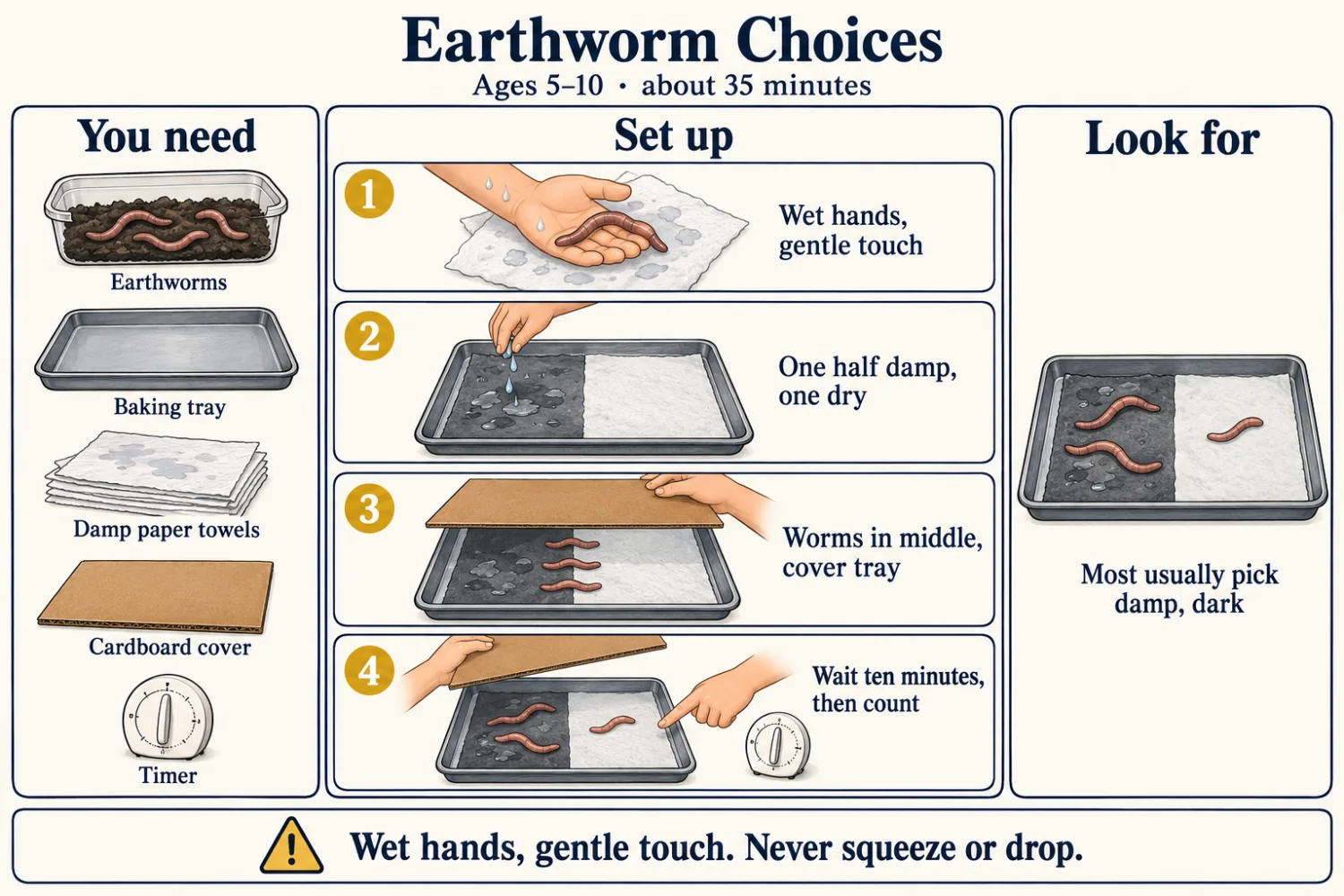
You need 6 to 10 earthworms from your yard, a baking tray, paper towels, a cup of plain water, and cardboard to cover the tray. Line the tray with paper towels. Wet one half until damp, not puddled, and leave the other half dry. Cover the tray with cardboard. Lay the worms across the middle. Cover the tray again. Wait 10 minutes, then count the worms on each side. Expect most worms to end up on the damp side, but not every worm. Some barely move. Stay with your child the whole time. You lift any log or rock, and children stand back about six feet. Look at, but never touch, any snake.
Before you start
- Hands-on time
- About 35 minutes, plus 10 to 15 minutes to find worms, and about 20 more for the optional light-and-dark test
- Where
- Indoors or outdoors
- Ages
- 5 to 10, with an easier and a harder version below
- Grown-up
- Stay with your child the whole time. You lift any logs or rocks, and you help handle the worms.
What you need
- 6 to 10 earthworms from your yard or garden, or a tub of worms from a bait shop
- A container with damp soil or damp leaves to hold the worms, kept in the shade
- A garden trowel (optional)
- A baking tray or shallow box, about 12 by 16 inches
- Paper towels
- A cup of plain water, or a new spray bottle of water
- A piece of cardboard big enough to cover the whole tray
- A timer
- A desk lamp with an LED bulb (optional)
- Clear plastic wrap or a clear lid big enough for half the tray (optional)
- A magnifying glass (optional)
- Paper and a pencil, or the printed observation sheet below
Virginia science standards SOL 3.6 aSOL 3.4 bSOL 1.5 aSOL 3.5 b
The big idea
Turn over a log after rain and you may find earthworms. Turn it over on a hot, dry day and they are often gone. That is a clue about what an earthworm needs.
Earthworms breathe through their skin, and it only works while the skin is moist. They dry out fast in sun and dry air. They have no eyes, but cells in their skin sense light. Most earthworms move away from bright light and dry ground, toward damp, dark places. A behavior that helps a living thing survive is called a behavioral adaptation. The worm does not plan this. Its body responds to light and dryness.
Like all animals, earthworms need air, food, water and shelter. Damp soil gives them all four. Earthworms also have a job in the soil. They eat dead leaves and bits of soil, mix the soil, and leave tunnels that let in air and water. Many people count them as decomposers, living things that break down dead plants and animals.
This activity lets your child test the worms’ responses with a fair, repeated test, then return them safely.
What to do
- Find worms. Look after rain, or dig gently in a damp garden bed or under a pile of leaves. Collect 6 to 10 worms. Keep them in a container of damp soil in the shade, and use them the same day.
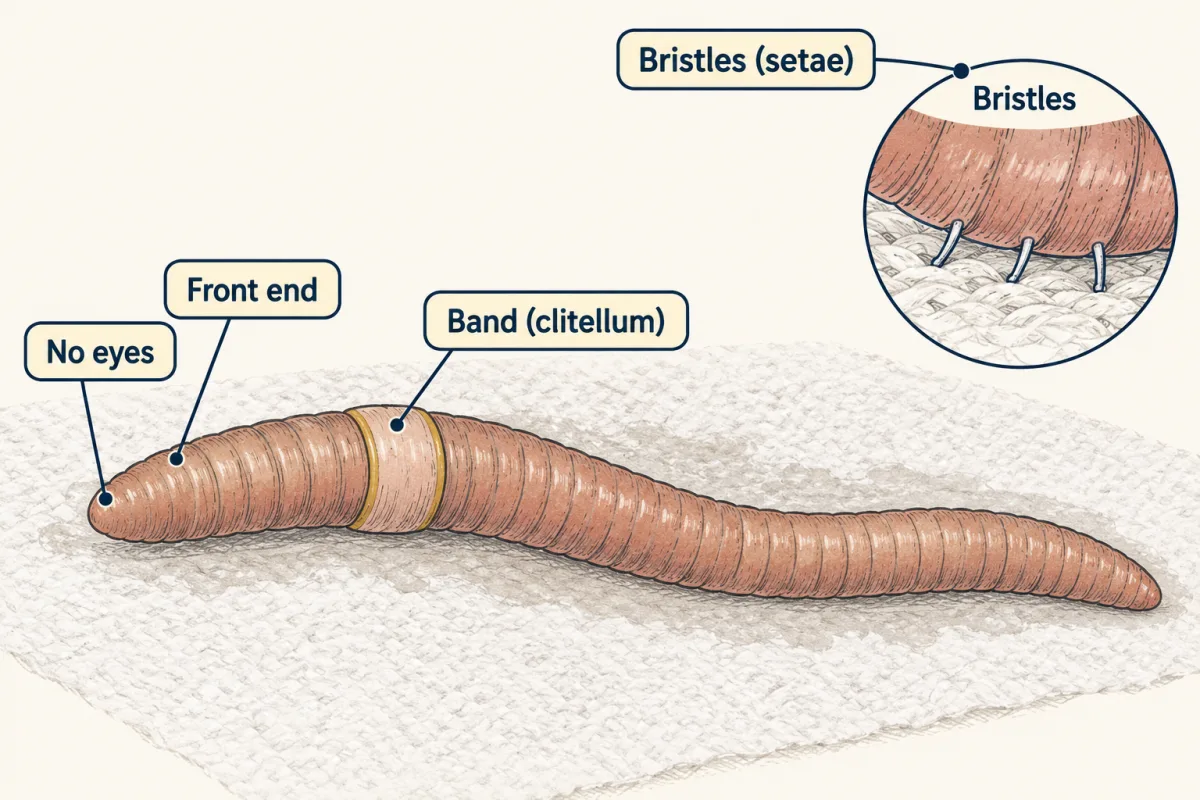
- Look closely. Wet your hands and your child’s hands. Place one worm on a damp paper towel. Find the band, called the clitellum, which is closer to the front end. Young worms do not have one yet. Let the worm crawl and listen. You may hear a faint scratching. That is its tiny bristles, called setae, gripping the paper. Keep each look to a minute or two.
- Set up damp and dry. Line the tray with paper towels. Wet one half so it is damp but not puddled. Leave the other half dry. Cover the whole tray with cardboard so both sides are equally dark. Ask, “Where do you think the worms will go?”
- Run the test. Lay the worms across the middle line. Cover the tray, wait 10 minutes, then count the worms on each side. A worm on the line counts as “middle”.
- Swap and repeat. Turn the tray around so the damp side is now where the dry side was. Put the worms back in the middle and test again. Add the two damp counts together, and the two dry counts together.
- Test light and dark (optional). Make the whole tray damp. Cover one half with cardboard. Cover the other half with clear plastic wrap or a clear lid, so both halves stay equally damp and only the light is different. Light the clear half with bright room light or a desk lamp with an LED bulb about 2 feet above, which stays cool. Keep the tray out of direct sun. Predict, place the worms in the middle, wait 10 minutes and count. Then swap the two covers and repeat.
- Return the worms. Mist yard worms with water and take them back to where you found them. Lay them on damp soil in the shade and watch them burrow. Keep bait-shop worms for fishing, or bag them for the trash.
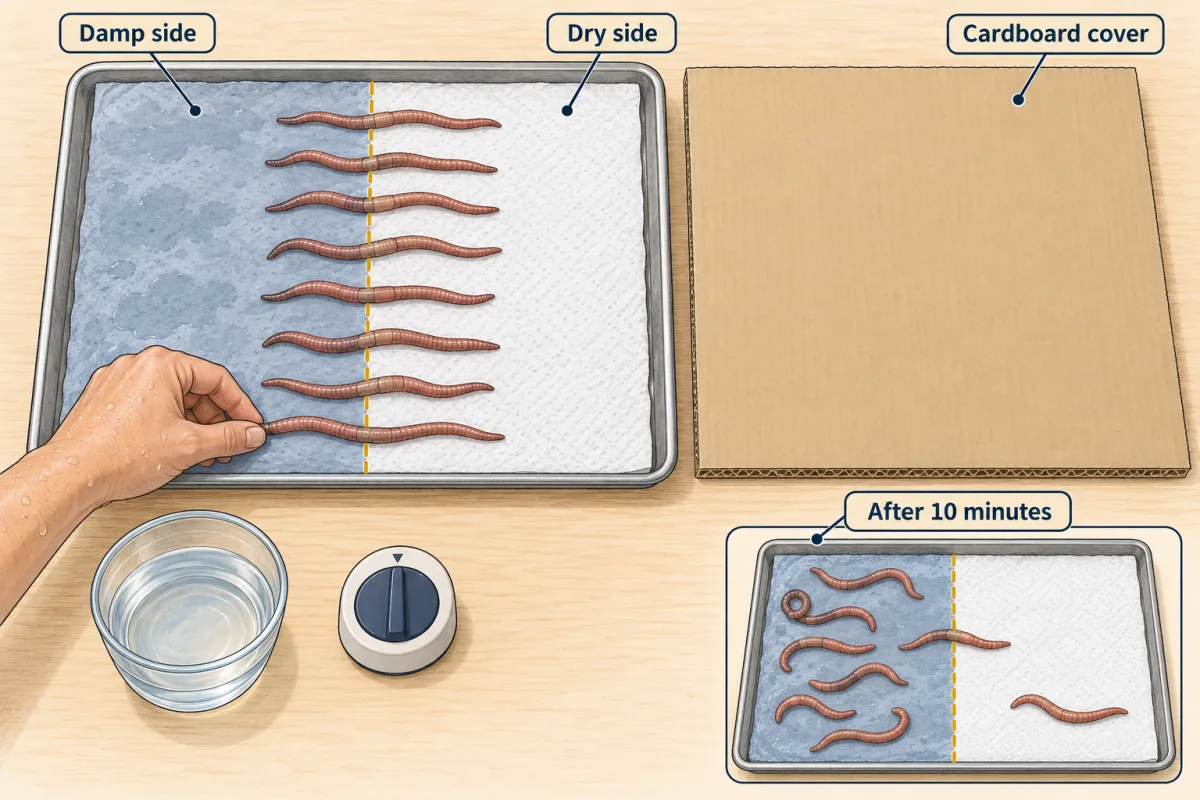
Expect most worms to end up on the damp side and under the cover, but not every worm. Some barely move in 10 minutes.
Questions to ask while you do it
Ask your child to guess first, then check.
- “I wonder which end is the front. How could we tell?”
- “Why do you think the worm’s skin feels wet?”
- “Where do you think the worms will go, the damp side or the dry side?”
- “What do you think will happen if we move the cardboard to the other end?”
- “I wonder how a worm knows it is in the light without eyes.”
- “Why might worms be hard to find on a hot, dry day?”
What children often think
-
A child might say “Worms come up in the rain so they won’t drown.”
You could try Ask, "How could we find out?" Scientists are still not sure why worms come up in rain. Many worms can live for days in water with enough air in it, so drowning is probably not the whole answer. Soaked soil can run low on oxygen for some kinds of worms. Another idea is that wet ground is easier to travel on.
-
A child might say “If you cut a worm in half, you get two worms.”
You could try Never test it. Ask, "Which half has the mouth?" Cutting an earthworm usually does not make two worms. Sometimes the front half survives and grows a new tail, but the back half usually dies.
-
A child might say “Worms have eyes. They saw the dark side.”
You could try Look for eyes with a magnifying glass. There are none. Earthworms have light-sensing cells spread through their skin, so their whole body can tell light from dark.
-
A child might say “Worms are slimy because they’re dirty.”
You could try Ask, "What would happen if their skin dried out?" The slime is mucus the worm makes. It keeps the skin moist so the worm can breathe through it, and it helps the worm slide through soil.
Why it works
An earthworm has no lungs. Oxygen passes through its thin, moist skin into tiny blood vessels. Mucus keeps that skin wet. On a dry surface or in sunlight, the skin dries and the worm cannot take in enough oxygen. Long exposure to light can harm or kill a worm, so keep tests short.
Light-sensing cells in the skin let a worm tell light from dark. Moving toward damp, dark soil keeps it where its skin stays moist. Over many generations, worms that responded this way were more likely to survive and leave young.
Many earthworms in Virginia yards came from Europe or Asia, including the nightcrawlers sold as bait. Virginia also has native earthworms. Jumping worms from Asia are spreading in Virginia. They strip the leaf layer from forest floors and gardens.
Easier and harder
Ages 5 to 7
Do only the damp and dry test, with four to six worms. Your child places the worms, then draws the tray at the end with a dot for each worm. Ask, “Which side has more dots?” Skip the counting table and just compare. Let your child hold a worm only on a wet, open palm, for a few seconds.
Ages 8 to 10
Run both tests twice and record counts in a table. Make a bar graph of damp versus dry and dark versus light. Ask your child to name the one thing that changed in each test and the things kept the same. Then ask them to write a claim, such as “Most worms moved to the damp side,” and the evidence for it.
If it doesn’t go as planned
If the worms barely move, they may be too cold or too dry. Mist them, let them rest in damp soil for 10 minutes, and try again in a room-temperature spot. If you cannot find worms, look early in the morning after rain, or under boards and leaf piles in shady beds. Spring and fall are usually easier than hot summers.
Observation sheet
Observation sheet
What do earthworms like?
NameDate
Count the worms on each side after 10 minutes.
| Test | Damp or dark side | Dry or light side | Worms in the middle |
|---|---|---|---|
| Damp / dry, try 1 | |||
| Damp / dry, try 2 | |||
| Dark / light, try 1 | |||
| Dark / light, try 2 |
Most worms went to the ___ side and the ___ side.
biochemistrypedia.com · Biology Together
Finish line
Test yourself
4 questions
Practice and MCAT-style, with explained answers.
Next · Lesson 25
Adopt a Tree
Does a bare tree die in winter? One tree, visited every month for a year, answers the question.
Continue →