Biology Together · Unit 5: Animal bodies, homes and adaptations
Fur, Feathers and Scales
A touch-and-compare table of real animal coverings: craft feathers, fur, fish scales and shells. Your child describes each one, guesses which animals wear it and whether they live on land or in water, then sorts animal pictures by covering, by legs and by how they move.
Watch first Set Up: Fur, Feathers and Scales · 0:44
Read the transcript of “Set Up: Fur, Feathers and Scales”
Film transcript: Set Up: Fur, Feathers and Scales
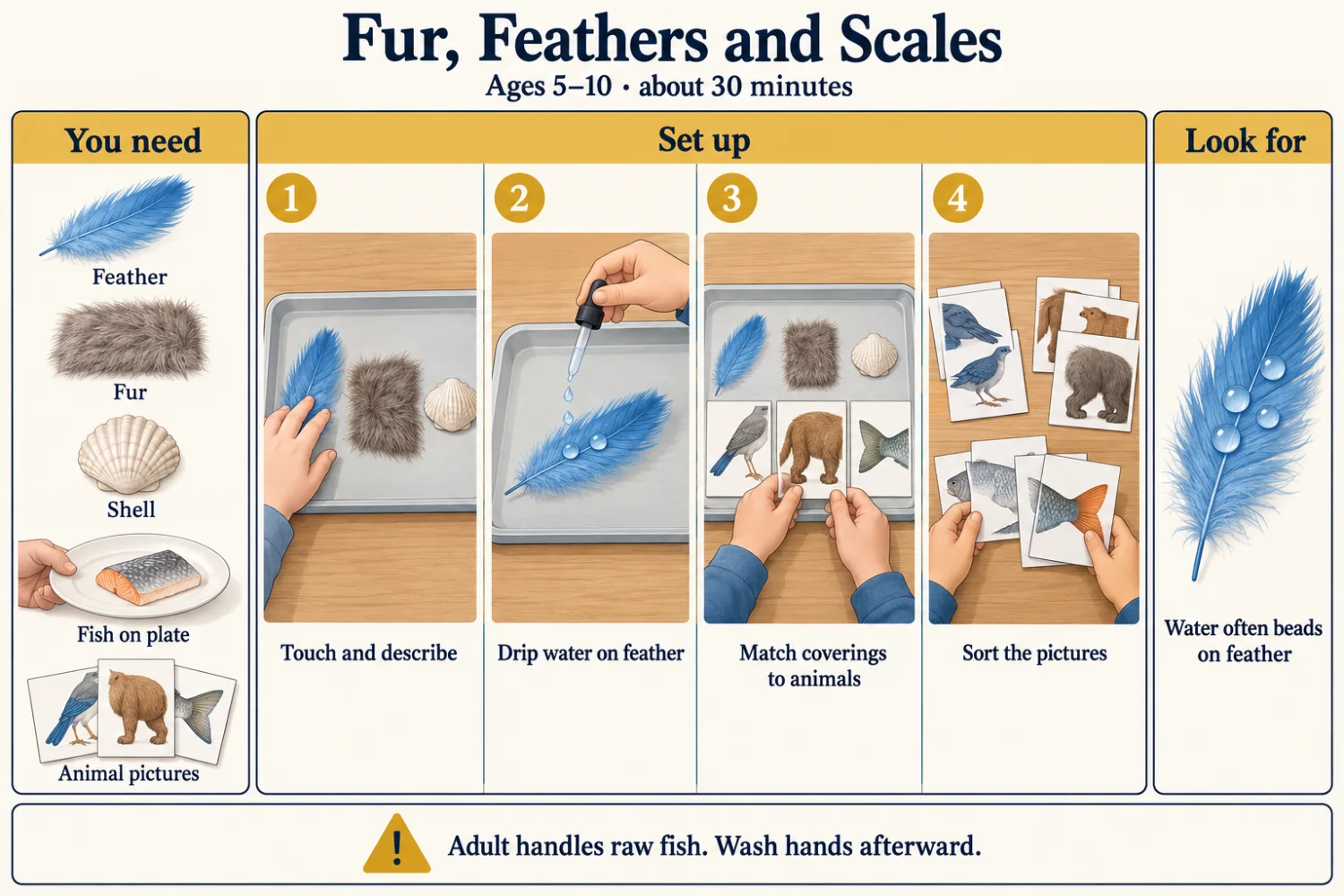
You need a tray, feathers from a craft store, a scrap of fake fur, two or three clean empty shells, and animal pictures. A small piece of raw fish is optional. Lay a feather, the fur, and a shell on the tray, a hand's width apart. Keep the pictures face down. Your child touches each one and finds two words for it. Put three drops of water on the feather and three on the fur. Water often beads up on a feather. Fur varies. Then turn the pictures over and match each covering to its animals. Stay with your child the whole time. An adult handles any raw fish, which can carry germs.
Before you start
- Hands-on time
- About 30 minutes
- Where
- Indoors
- Ages
- 5 to 10, with an easier and a harder version below
- Grown-up
- Stay with your child the whole time. You handle the raw fish, and you check shells for sharp edges first.
What you need
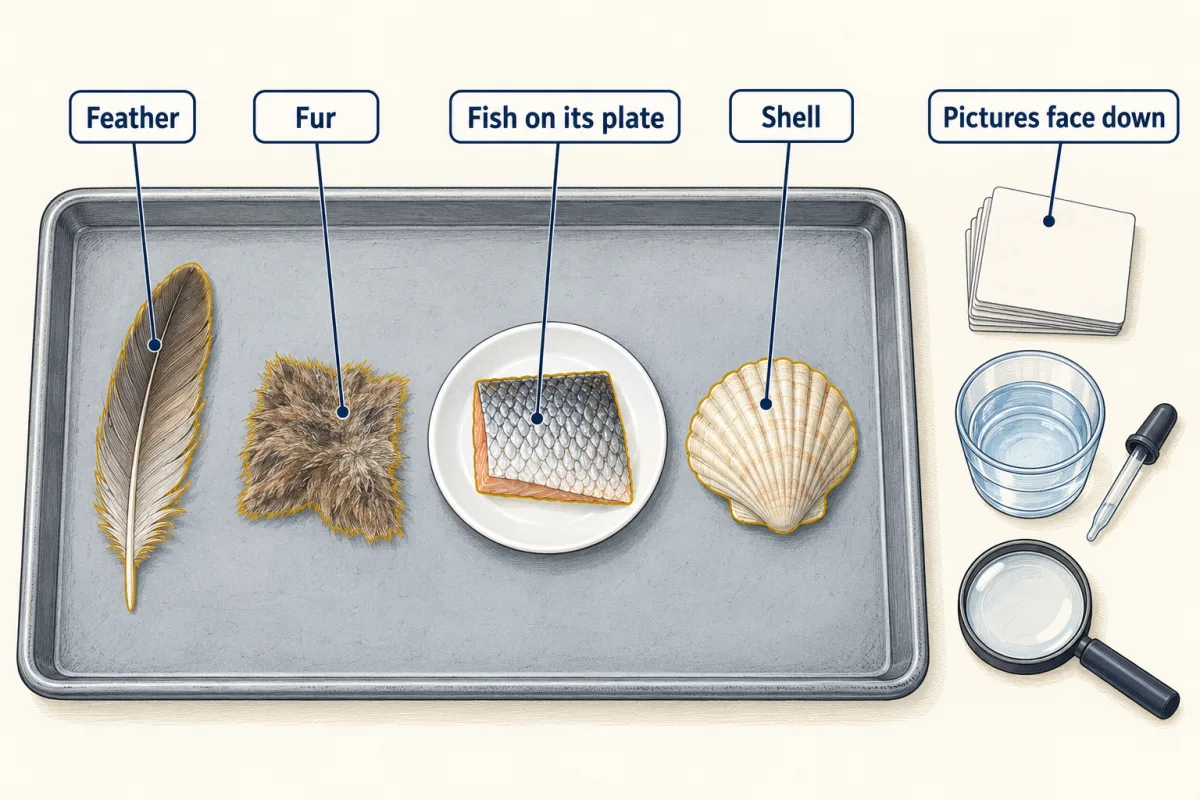
- A large tray or baking sheet
- 3 to 5 feathers from a craft store
- A scrap of fake fur, or a pet's brushed-out fur in a zip bag
- A small piece of raw fish with the skin and scales still on, on a plate (optional; ask the fish counter to leave the scales on)
- 2 or 3 clean, empty shells from a store or a beach
- A dropper or spoon and a small cup of water
- 12 to 16 animal pictures, printed or cut from magazines: include a snake, a turtle, a bat, a penguin, a frog, a fish, a duck, a dog, a squirrel, a snail and an insect
- A magnifying glass (optional)
- Paper and a pencil, or the printed observation sheet below
Virginia science standards SOL 1.5 bSOL 1.5 cSOL 1.5 a
The big idea
Run a finger along a feather and it feels smooth one way and rough the other. Stroke a fish from head to tail, then tail to head, and the same thing happens. Your child’s hands notice these differences before any book does.
Animals have different body coverings: hair or fur, feathers, scales and shells. They also have different appendages, the parts that stick out from the body, like legs, wings, fins and tails. These parts do jobs. Feathers are light and help birds fly and stay warm. Scales and fins suit life in water. Fur and legs suit many animals on land. A shell protects the animal inside. A snail’s shell covers its soft body, and a turtle’s shell is part of its skeleton.
Virginia’s grade 1 standard asks children to describe these features, use them to guess where an animal lives and how it moves, and group animals by features they choose. It says children do not need to sort animals into groups like reptiles, birds or mammals. Let your child make the rules.
What to do
- Set the table. Lay a feather, the fur, the fish on its plate and a shell on the tray, a hand’s width apart. Keep the pictures face down for now.
- Touch and describe. Your child touches each covering (you hold the fish, and anyone who touches it washes their hands right after) and finds two words for it: soft, hard, smooth, rough, slimy, light, bumpy. Write their words down.
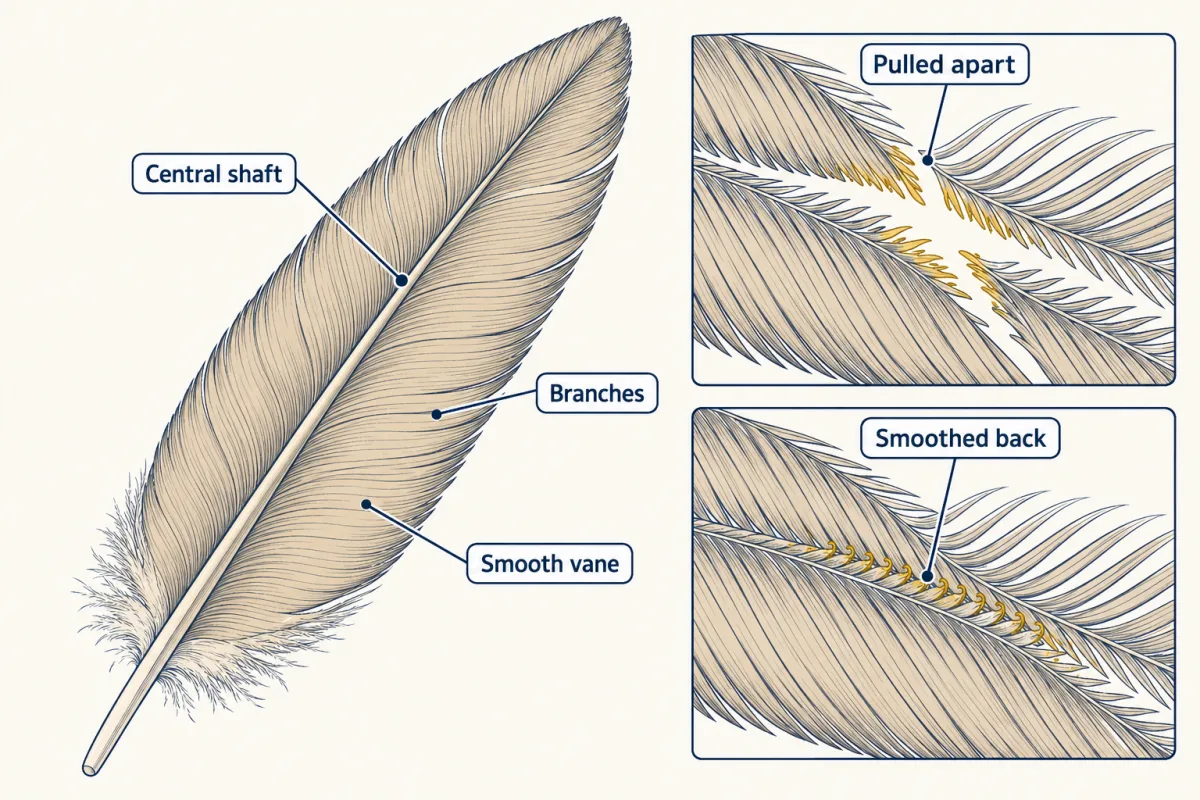
- Look closer. Gently pull a feather’s edge apart, then smooth it back with your fingers. The parts hook together again. Stroke the fish’s scales from head to tail, then backward, then wash hands before touching anything else. Ask why scales might point toward the tail. With a magnifier, look for rings on a shell.
- Predict, then drip. Ask, “Which one will stay driest if it gets wet?” Then put three drops of water on the feather and three on the fur. Water often beads up on a feather. Fur varies: water may bead up on it or soak in, and craft feathers vary too.
- Match to animals. Turn the pictures over. For each covering, your child finds the animals that wear it. Ask, “Does this animal live on land or in water? How does it move: walk, crawl, fly or swim?”
- Look at the parts that stick out. Point to legs, wings, fins and tails in the pictures. Ask what each one is for.
- Sort three ways. Your child sorts the pictures by covering, then by number of legs (0, 2, 4, 6 or 8), then by how the animal moves. Let them choose a fourth rule of their own.
- Clean up. Wrap the fish and put it back in the fridge within 2 hours of taking it out (1 hour if the room is above 90 °F), or throw it away. Wash hands with soap and water, and wash the tray and table with soap and water.
Questions to ask while you do it
Ask your child to guess first, then check.
- “I wonder which covering would keep an animal warmest. Which would you want on a cold day?”
- “What do you think is under the slime on a fish?”
- “This animal has fins. Do you think it lives on land or in water? Why?”
- “The bat flies. Does it have feathers? What does it have?”
- “What do you think would happen if a turtle tried to take off its shell?”
- “Which animal was hardest to sort? Why?”
What children often think
-
A child might say “Only dogs and cats have fur.”
You could try Ask your child to find every furry animal in the pictures. Squirrels, bats, deer, rabbits and people all have hair or fur. Many land animals have it, in many shapes and sizes.
-
A child might say “Fish are slimy, so they don’t have scales.”
You could try Stroke the fish from tail to head and feel the edges catch, then wash your hands. Most fish have scales, with a layer of slime on top that helps protect them. Some fish, like most catfish, really have no scales.
-
A child might say “Only birds fly, and everything with feathers can fly.”
You could try Put the bat and the penguin side by side. Ask, "Which one flies? Which one has feathers?" Bats fly on wings of skin and have fur. Penguins have feathers and swim instead of fly. Many insects fly too.
-
A child might say “A turtle can climb out of its shell.”
You could try Ask your child to feel their own ribs and backbone. A turtle’s shell is joined to its ribs and backbone, so it cannot come out, just as you cannot take off your ribs. Many turtles can pull their head and legs in, but sea turtles cannot.
Why it works
Each covering is built for different jobs. A flat outer feather has a central shaft with rows of branches, and tiny hooks hold the branches together into one smooth, flat surface. That makes a light, strong surface for flying, and fluffy down feathers underneath trap warm air. Fur also traps air near the skin. Most fish have thin, overlapping scales covered in mucus, which protects against infection and helps the fish slip through water. A turtle’s shell is part of its skeleton. The top half is joined to its ribs and backbone, and the bottom half is made of other flat bones.
Touching the real thing lets your child find features to sort by, which is what grade 1 asks for. Some animals are puzzles on purpose. A frog has bare, damp skin, with no fur, feathers, scales or shell. A snake has scales but no legs. Those puzzles show that grouping animals depends on which feature you pick.
Easier and harder
Ages 5 to 7
Use three coverings (feather, fur, shell) and eight pictures. Sort only by covering, then only by land or water. Your child can point and say instead of writing. Keep the fish for the end, or show a photo of fish scales instead.
Ages 8 to 10
Add a fourth sort by appendages: wings, fins, legs or none. Your child makes a table with each animal’s covering, legs, home and way of moving. Then they write two yes-or-no questions that split the pictures into groups, such as “Does it have feathers?” That is the first step toward a key.
If it doesn’t go as planned
Some grocery fish come with the scales already scraped off. Ask at the counter for a piece with scales left on, or look for skin-on salmon, which sometimes keeps its small scales (run a finger along the skin to check). A clear close-up photo works too. If water soaks right into your craft feather, say so. Dyed feathers sometimes behave differently from a bird’s own feathers.
Observation sheet
Observation sheet
Fur, feathers and scales
NameDate
Touch each covering. Write or draw what you find.
| Covering | How it feels | One animal that has it | Land or water? | How does it move? |
|---|---|---|---|---|
| Feathers | ||||
| Fur | ||||
| Scales | ||||
| Shell |
I sorted my animals by:
biochemistrypedia.com · Biology Together
Finish line
Test yourself
4 questions
Practice and MCAT-style, with explained answers.
Next · Lesson 16
Beak Buffet
Why don't all birds have the same beak? A timed kitchen-tool buffet lets a child find out.
Continue →